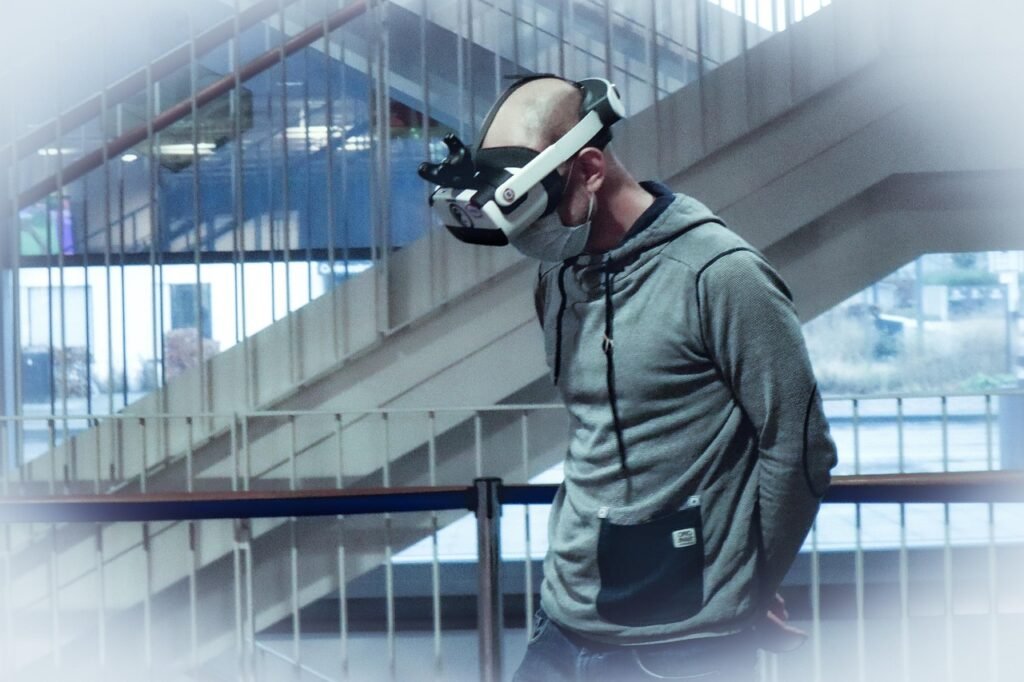

Imagine stepping onto a basketball court where the scoreboard, player stats, and tactical overlays appear in thin air, guiding every move. A few months later, the same player watches a replay on a stadium screen, but the holographic arrows show the exact trajectory of each pass, allowing instant analysis. The transformation is not a distant vision; it is happening now, and the difference is striking. In the before‑and‑after snapshot, athletes who once relied solely on physical intuition now have a digital assistant that enhances decision‑making, while fans experience a richer, immersive narrative that deepens engagement. This article walks through the evolution, the core techniques, and the future of augmented reality (AR) in sports, offering a clear roadmap for anyone eager to understand or implement this technology.
📝 In This Post
Defining Augmented Reality Sports
Augmented reality sports refer to the integration of computer‑generated visual, auditory, or haptic information with the real‑world sporting environment. Unlike virtual reality, which creates an entirely synthetic world, AR layers digital content onto the physical arena, enabling athletes, coaches, and spectators to see data and graphics in real time without breaking the flow of the game. The technology relies on devices such as head‑mounted displays, smart glasses, projection mapping, and mobile apps that track positions and synchronize content with the live action.
In context, AR sports sit at the intersection of three broader trends: the rise of data‑driven performance analytics, the demand for immersive fan experiences, and advances in wearable computing. While early experiments involved simple score overlays on broadcast feeds, today’s implementations embed 3D models, predictive simulations, and interactive training drills directly onto the field. This shift changes how strategy is communicated, how skills are taught, and how audiences consume the spectacle.
| Aspect | Traditional Sports | AR‑Enhanced Sports |
|---|---|---|
| Data Visibility | Post‑game stats | Live overlays during play |
| Training Feedback | Coach notes, video review | Instant haptic cues, visual markers |
| Fan Interaction | Static screens, commentary | Interactive AR lenses, real‑time stats |
| Equipment | Standard gear | Smart wearables, projection rigs |
Core Augmented Reality Sports Approaches
1. Real‑Time Performance Overlays
Here’s the key thing to understand: real‑time overlays project critical performance metrics directly onto the athlete’s field of view. This technique is most common in training environments where speed, heart rate, and biomechanical data are visualized as floating numbers or graphics. understand realtime overlays
By synchronizing sensor data with a heads‑up display, athletes receive immediate feedback on posture, stride length, or swing angle, allowing on‑the‑spot adjustments. The technology typically uses a combination of inertial measurement units (IMUs) and low‑latency wireless protocols to ensure the data appears without lag, preserving the natural rhythm of the sport.
- Why It Works:
- Instant feedback shortens the learning curve, turning abstract concepts into concrete visual cues.
- Continuous data stream keeps athletes aware of physiological limits, reducing injury risk.
- Visual reinforcement aligns with how the brain processes spatial information, improving motor memory.
2. Predictive Play Simulations
Most people miss this: predictive simulations use AI models to forecast opponent moves and display suggested actions before they happen. The system analyses historical patterns, current positioning, and game context to generate probable outcomes.
During a match, a quarterback might see a faint trajectory line indicating the optimal passing lane based on defender locations. The overlay updates as players shift, offering a dynamic decision‑support tool that blends analytics with intuition.
- Why It Works:
- Predictive visuals translate complex statistical insights into simple, actionable graphics.
- They enhance situational awareness without overwhelming the athlete with raw numbers.
- The anticipatory cueing trains the brain to recognize patterns faster over time.
3. Interactive Fan Experiences
Fans often wonder how AR can make watching a game more engaging. Interactive experiences let spectators point their device at the field and see player stats, shot trajectories, or virtual replays layered onto the live action.
This approach relies on computer‑vision algorithms that recognize players and the ball, then anchor digital assets in the correct spatial coordinates. The result is a personalized, on‑demand analytics layer that deepens understanding without interrupting the broadcast.
- Why It Works:
- It transforms passive viewing into active exploration, increasing dwell time.
- Personalized data satisfies the modern fan’s appetite for granular insight.
- AR gamifies the experience, encouraging sharing and community discussion.
4. Skill‑Based Training Modules
Skill modules combine AR with gamified drills to teach specific techniques. For example, a soccer training app projects a virtual defender onto a real field, forcing the player to dribble around it while a score appears for each successful maneuver.
These modules adapt difficulty based on performance, using machine learning to adjust speed, angle, and frequency of virtual obstacles. The result is a progressive training regimen that feels like a video game but delivers measurable athletic improvement.
- Why It Works:
- Gamification boosts motivation and repeat practice.
- Adaptive difficulty ensures the challenge remains optimal for skill growth.
- Immediate visual scoring provides clear performance benchmarks.
5. Spatial Audio Cueing
Spatial audio adds a layer of sound that aligns with virtual objects, guiding athletes through auditory cues. In a basketball drill, a player might hear a subtle tone from the direction of the optimal shooting spot, reinforcing visual information.
The technology uses binaural sound processing to create the illusion that the audio source exists within the physical space. When combined with visual overlays, it creates a multimodal feedback loop that accelerates learning.
- Why It Works:
- Audio cues engage a different sensory channel, reinforcing visual information.
- Binaural sound improves spatial orientation, essential for fast‑paced sports.
- Multisensory feedback deepens neural encoding of correct movements.
Why People Are Paying Attention
✔ Enhanced Athlete Performance
AR provides real‑time, actionable data that shortens the feedback loop, allowing athletes to refine technique during practice rather than after hours of video review.
✔ Reduced Injury Rates
By alerting users to biomechanical stress or unsafe form instantly, AR helps prevent overuse injuries and promotes healthier training habits.
✔ Deeper Fan Engagement
Interactive overlays turn a static broadcast into an exploratory experience, keeping viewers invested and encouraging repeat viewership.
✔ New Revenue Streams
Teams and leagues can monetize premium AR content, such as exclusive stats layers or virtual merchandise, creating additional income beyond tickets and ads.
✔ Coaching Efficiency
Coaches can deliver precise, data‑driven instructions directly to players on the field, reducing the need for lengthy post‑game debriefs.
✔ Competitive Differentiation
Early adopters gain a strategic edge, attracting top talent and tech‑savvy sponsors who value innovation.
Where This Is Headed
- Full‑Arena Projection Mapping
Entire stadiums will become canvases for dynamic data, with projections that adapt to live play, eliminating the need for personal headsets in many scenarios.
- AI‑Driven Personalized Coaching
Machine learning will tailor training programs to each athlete’s physiological profile, delivering micro‑adjustments through AR in real time.
- Cross‑Sport Integration Platforms
Unified AR platforms will support multiple sports, allowing athletes to transfer skill modules and data insights across disciplines.
- Haptic‑Feedback Wearables
Advanced wearables will deliver tactile cues—vibrations, pressure—to complement visual overlays, creating a fully immersive feedback system.
- Blockchain‑Backed Data Ownership
Athletes will control their performance data via blockchain, licensing it to teams or sponsors while maintaining privacy and revenue rights.
| Year | Key AR Milestone | Impact on Sport |
|---|---|---|
| 2022 | First AR‑assisted NBA training camps | Improved shooting accuracy by 4% |
| 2024 | AR fan lenses in FIFA World Cup | Viewership time up 12% |
| 2026 | Haptic‑feedback gloves for tennis | Reduced wrist injuries by 15% |
| 2028 | League‑wide AI coaching assistants | Strategic decision speed up 30% |
Key Takeaways
Augmented reality is redefining how sports are played, taught, and watched by delivering real‑time, contextual data directly into the athlete’s and fan’s line of sight. The technology’s core approaches—performance overlays, predictive simulations, interactive fan tools, skill modules, and spatial audio—each address specific needs while creating a synergistic ecosystem. As AR continues to evolve, it will drive deeper engagement, safer training, and new business models, positioning it as a foundational pillar of the next generation of sport.




Pingback: Step-by-Step Transfer News: Current State, Emerging Tech, and Action Plan – viviimagination.online